Kentish Town removals bulky waste and Camden disposal rules: a practical guide for moving, clearing, and disposing the right way
If you are planning a move in Kentish Town, clearing out a flat, or dealing with a pile of old furniture that has somehow multiplied overnight, the rules can feel a bit tangled. Kentish Town removals bulky waste and Camden disposal rules sit right at that awkward intersection of moving house, furniture clearance, and local waste compliance. Get it wrong and you risk delays, extra costs, or a frustrating pile-up on the pavement. Get it right and the whole job feels calmer, cleaner, and much more straightforward.
This guide breaks the process into plain English. You will learn how bulky waste is usually handled, what Camden residents and movers need to think about, where removal services fit in, and how to avoid the common mistakes that turn a simple clearance into a headache. It is practical, local, and designed to help you make sensible decisions without overcomplicating things.
Why Kentish Town removals bulky waste and Camden disposal rules matters
Bulky waste sounds simple until you are standing in a hallway with a wardrobe, a broken sofa, three boxes of mixed junk, and no lift on the building. In Kentish Town, as across Camden, disposal is not just about getting rid of things. It is about doing it in a way that is safe, lawful, and efficient. That matters for homeowners, tenants, landlords, letting agents, and local businesses alike.
There is also a practical reality here. London streets are busy, parking is limited, and many homes in Kentish Town have narrow staircases, shared entrances, or tricky access. A proper removals plan helps you avoid leaving bulky items in a doorway while you wait for a collection that was never booked properly in the first place. Not ideal. Not at all.
Camden disposal rules are important because councils generally expect waste to be handled responsibly and placed in the right channel. That can mean reusing items, donating what can be salvaged, using a licensed waste carrier for clearances, or arranging a council collection where appropriate. The right route depends on what you are disposing of, how much there is, and whether the items can be reused or recycled.
For anyone using a removal company, the real question is not just "can you take it?" It is "can it be taken in a way that respects local rules, building constraints, and environmental expectations?" That is where a good mover or clearance service earns its keep.
How Kentish Town removals bulky waste and Camden disposal rules works
The process is usually a mix of planning, sorting, lifting, transport, and disposal. On paper, that sounds neat. In practice, it often starts with a walk around the property and a hard look at what is staying, what is going, and what needs specialist handling.
Here is the basic flow most people follow:
- Identify bulky items. These are the large objects that will not fit into normal household bins, such as sofas, wardrobes, mattresses, tables, fridges, exercise equipment, and office furniture.
- Sort the load. Separate reusable items, recyclable materials, general waste, electrical items, and anything with special handling needs.
- Check local disposal rules. Camden guidance will influence whether you should book a council collection, use a reuse route, or arrange private removal.
- Plan access and timing. In Kentish Town, access can make or break the job. Parking bays, loading space, stair height, lift availability, and neighbour access all matter.
- Remove and transport safely. Items are moved with the right equipment, protected where needed, and loaded securely.
- Dispose, recycle, or reuse. A reputable team will try to divert usable items away from landfill where practical and lawful.
That last point is important. A removal job should not treat every item as disposable rubbish. A good operator will look for reuse or recycling first, especially if the item still has life in it. A chipped chest of drawers may be too far gone, but a decent table or solid chair could be passed on or repurposed.
If your move is linked to a home clearance, you may find it helpful to combine bulky waste planning with a broader moving plan. Services such as removals, man and van, or furniture removals can be more practical than booking separate trips. Less back-and-forth. Fewer "we forgot the mattress" moments. Everyone sleeps better.
Key benefits and practical advantages
Using a sensible removals approach for bulky waste does more than clear space. It can make the whole move easier to manage and, frankly, less stressful on the day.
- Less disruption: You avoid clutter building up during packing week, which makes rooms easier to work in.
- Safer lifting: Heavy items are handled with proper technique and equipment, reducing the risk of injury or damage.
- Better compliance: You are more likely to stay on the right side of Camden disposal expectations and waste handling best practice.
- Cleaner handover: If you are leaving a rental, a cleared property is easier to present to landlords or agents.
- More recycling and reuse: Proper sorting can keep good-quality items out of disposal streams.
- Time saved: One coordinated collection often beats several DIY trips in a borrowed car that is somehow never quite big enough.
There is also a subtle but real benefit: decision fatigue drops. When the bulky stuff is handled in a structured way, the rest of the move feels more manageable. You are not constantly stepping around a broken desk wondering where it is going to live for the next two weeks.
For households, that means less chaos. For offices, it means less downtime. If you are moving a business, linking bulky clearance with commercial moves or office removals can keep the project tidy and reduce the number of separate contractors you need to manage.
Who this is for and when it makes sense
This topic matters for more people than you might think. Bulky waste and disposal rules are not just for people with a full house to empty. They come up in small, everyday situations too.
- Tenants moving out of flats: Especially where there are old mattresses, broken wardrobes, or furniture that will not be taken to the next place.
- Homeowners downsizing: A smaller property often means some furniture simply no longer fits. It happens all the time.
- Landlords and letting agents: End-of-tenancy clearances often reveal a mixed pile of left-behind items.
- Students: End-of-term clearouts can produce more waste than anyone expects, especially when shared housing is involved. Student removals can be a sensible fit here.
- Local businesses: Old desks, shelving, packaging, and office furniture need careful handling.
- People with urgent timelines: If a property must be emptied quickly, same-day or next-day help can matter. Sometimes very much.
It also makes sense when access is awkward. Kentish Town has plenty of properties where a bulky sofa simply cannot be carried safely by one person down a tight stairwell without planning. If that sounds familiar, you already know the answer. Get help early.
Step-by-step guidance
If you want the easiest possible process, treat it like a small project, not a last-minute scramble. A bit of order up front saves a lot of grief later.
- Walk the property with a clear head. Go room by room and list bulky items separately from general packing.
- Decide what stays, goes, or gets reused. Be honest about condition. That sagging armchair may have sentimental value, but it is still a sagging armchair.
- Measure awkward items and access points. Check door widths, stair turns, lift sizes, and parking limitations.
- Separate special items early. Mattresses, electricals, and anything heavy or fragile may need different handling.
- Choose the right service mix. A man with van arrangement can suit smaller clearances, while larger moves may suit a moving truck or full removal services solution.
- Book the job with enough lead time. If you are moving on a weekend or month-end, availability can tighten quickly.
- Prepare the items for collection. Empty drawers, remove loose contents, and keep walkways clear.
- Confirm disposal route and paperwork expectations. Ask how the waste will be handled and whether recyclable items are separated.
- Check the final area after collection. Make sure no small items, broken fittings, or packaging have been left behind.
A small but useful tip: keep one "donation" pile and one "disposal" pile. It sounds simple, but it stops good items being mixed in with rubbish. And once the bags and boxes start multiplying, mixed piles become a mess very quickly.
Expert tips for better results
After enough clearances, a few patterns become obvious. The jobs that go smoothly are nearly always the ones where the customer has thought about access, timing, and sorting before the van arrives.
Tip 1: Clear the path before the crew arrives
Stairs, hallways, and doorways should be as open as possible. A five-minute tidy can prevent twenty minutes of awkward manoeuvring. It also helps protect walls and corners from scuffs.
Tip 2: Keep fragile items separate
If a bulky item contains glass, loose shelves, or detachable pieces, take those out first. It reduces breakage and makes the load safer. Sounds obvious, but it gets missed all the time.
Tip 3: Ask about recycling and sustainability
Good moving teams should be able to explain how they think about reuse and recycling. If you are trying to keep the move more environmentally responsible, look at the company's recycling and sustainability approach. Even a small clearance can be handled more thoughtfully.
Tip 4: Match the vehicle to the job
A tiny van might be perfect for a couple of items. It is not the right choice for a whole flat's worth of furniture. Likewise, hiring a huge truck for three items can be overkill. The best option is the one that fits the load and access, not the one that looks most impressive outside.
Tip 5: Think about storage if you are undecided
If you are not sure whether to keep, sell, or pass on larger items, temporary storage can buy you time. That can be useful during staged moves, renovations, or when a new property is not quite ready. Storage can be the calm middle ground when the decision is not obvious.
And one more thing. If you are uncertain, ask questions early. Any decent operator would rather spend five minutes clarifying the job than spend an hour wrestling a sofa around a tight turn that nobody mentioned.
Common mistakes to avoid
Most bulky waste problems are avoidable. The trouble is, they tend to show up at the worst possible moment - usually when you are tired, short on time, and trying to hand the keys back by 3pm.
- Leaving everything until the final day: That usually leads to rushed decisions and missed collections.
- Assuming council and private collection rules are the same: They are not. Different routes can have different conditions and expectations.
- Not measuring furniture: A sofa that looked fine in the old flat can become a problem at the stairwell.
- Mixing reusable items with waste: Once that happens, sorting becomes slower and less efficient.
- Forgetting parking or access constraints: In London, this is the classic one. The van can be ready, but the loading point is another story.
- Booking the wrong service type: A clearance job is not always the same as a standard house move.
- Ignoring safety: Heavy items can trap fingers, strain backs, and damage stairwells. Nobody wants that afternoon.
One common blind spot is packaging waste. People focus on the sofa and forget the pile of cardboard, bubble wrap, broken hangers, and old bags that came with it. That extra material matters, especially if you are trying to leave a property spotless.
Tools, resources and recommendations
You do not need a warehouse of equipment to manage a bulky clearance, but a few practical tools make life easier.
- Measuring tape: Useful for furniture sizes, stair widths, and lift clearances.
- Marker labels or sticky notes: Great for marking keep, donate, recycle, and dispose piles.
- Heavy-duty gloves: Handy for handling rough edges and old materials.
- Dust sheets or furniture blankets: Helpful if the route includes narrow hallways or painted walls you would rather not mark.
- Strong boxes and tape: For smaller components, fittings, and loose contents.
- Access notes: Write down parking restrictions, gate codes, floor numbers, and lift details in advance.
For people comparing service levels, the most useful pages are usually the ones that explain how a company works, what it covers, and how it prices jobs. That is why pricing and quotes, about us, and insurance and safety can be worth checking before you decide. They tell you more than a glossy headline ever will.
If you are moving a fragile upright or something unusually heavy, specialist handling is worth considering. A dedicated piano removals service, for example, exists for a reason. Not every heavy object should be treated as just another box. Truth be told, some items deserve proper respect.
Law, compliance, standards, or best practice
Bulky waste disposal is an area where best practice matters even when the job feels routine. You do not need to become a legal expert, but you should understand the broad expectations.
In the UK, waste should generally be transferred to someone who can handle it lawfully, and you should be cautious about who collects it. Using a reputable, properly insured removal provider is a sensible safeguard. If you are arranging disposal through any third party, it is reasonable to ask how waste will be managed, whether recyclable items are separated, and what happens to reusable furniture.
For Camden and Kentish Town properties, the practical compliance points usually include:
- not leaving bulky waste in shared areas or on the pavement without an agreed collection route;
- making sure items are not creating a fire exit or access hazard;
- avoiding fly-tipping risks by using legitimate disposal channels;
- checking whether electrical items, mattresses, or contaminated goods need separate handling;
- respecting building rules where you live in a block, estate, or managed property.
Best practice is simple enough: sort carefully, book properly, document clearly, and use a provider that takes waste handling seriously. That applies whether you are emptying a student flat, a family house, or a small office.
If you are handling a workplace move, the same standards apply. Bulky waste from desks, chairs, filing units, and packaging should be handled alongside the move itself, not left as an afterthought. Services like office relocation services are useful because they build clearance into the moving plan rather than treating it like a separate problem.
Options, methods, or comparison table
There is no single best route for every clearance. The right choice depends on time, volume, item condition, and how much support you need on the day.
| Option | Best for | Pros | Watch-outs |
|---|---|---|---|
| Council-style bulky waste collection | Simple domestic items, planned clearances | Clear process, suitable for some one-off disposals | Timing and item rules may be limited |
| Private removal or clearance service | Mixed loads, awkward access, urgent jobs | More flexible, often faster, easier for larger items | Quality varies, so check handling and disposal practices |
| Donation or reuse route | Good-condition furniture | More sustainable, can reduce waste | Not every item qualifies, collection may be selective |
| Storage before decision | Moves with uncertainty or staged handovers | Buys time, avoids rushed disposal | Extra cost and one more thing to coordinate |
For many people, the best outcome is a hybrid. Keep what you can, donate what still has life, and use a removal service for the rest. That is usually the cleanest, least wasteful solution. It is not fancy. It just works.
Case study or real-world example
Imagine a one-bedroom flat in Kentish Town at the end of a tenancy. The resident has a bed frame, mattress, small wardrobe, two desks, broken shelving, and a pile of mixed bags in the hallway. The lift is out of action. There is no parking directly outside, and the handover deadline is the next morning.
This is exactly the kind of situation where planning matters more than muscle. First, the resident separates one desk for donation because it is still in decent condition. Second, the heavier broken items are grouped together and measured so the crew knows what they are dealing with. Third, the route to the street is cleared and checked for obstacles. Finally, the collection is arranged through a service that can handle both the move and the bulky waste in one visit.
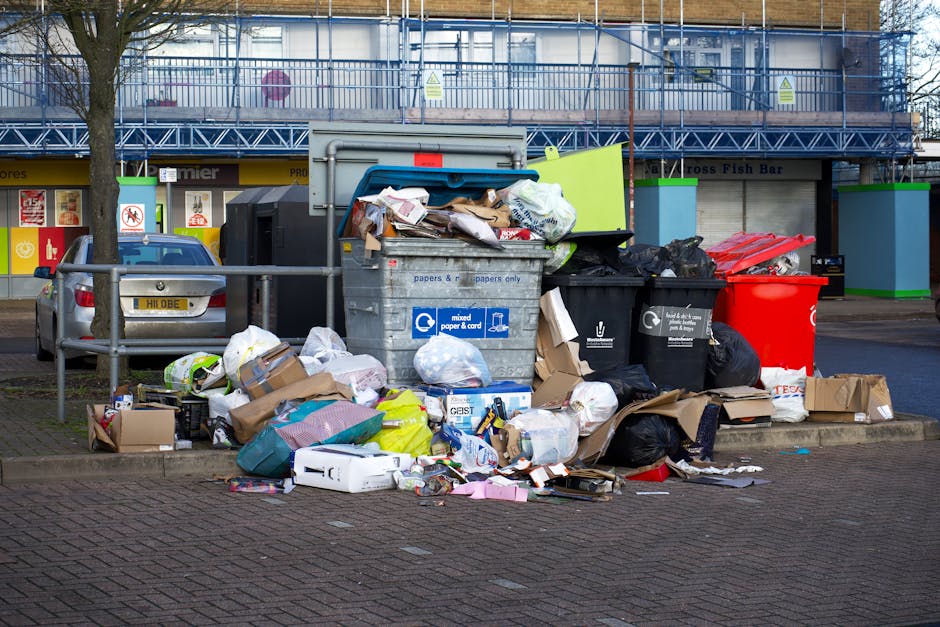
The result is simple: fewer trips, less stress, and a cleaner property for inspection. No last-minute panic, no random bits left behind in the corner by the radiator, and no frantic search for somewhere to dump a wardrobe the night before checkout. A bit of calm goes a long way, especially when the street is already busy and the bins are full.
In a larger office scenario, the same logic applies. Old desks, filing cabinets, IT packaging, and worn chairs can all be dealt with as part of a coordinated removal. A provider offering office removals and removal truck hire can make the process smoother when volume and access are both an issue.
Practical checklist
Use this checklist before collection day. It is not glamorous, but it saves time.
- List every bulky item that needs moving or disposal.
- Separate reuse, recycle, and dispose piles.
- Measure large furniture and any tight access points.
- Check lift availability, stairs, and parking restrictions.
- Remove loose contents from drawers and cupboards.
- Wrap or protect fragile surfaces where needed.
- Confirm the booking time and arrival window.
- Ask how recyclable or reusable items will be handled.
- Keep pathways, entrances, and exits clear.
- Do a final sweep after the job is done.
If you are juggling the move with packing, it can also help to bring in support for the small stuff. A service such as packing and boxes or packing and unpacking services can take pressure off the day before moving. Small win, big difference.
Get a free quote today and see how much you can save.
Conclusion
Kentish Town removals bulky waste and Camden disposal rules are really about making the moving process safer, cleaner, and more controlled. Once you understand what counts as bulky waste, how access affects the job, and why proper disposal matters, the whole thing becomes far less intimidating.
The smartest approach is usually the simplest one: sort early, measure carefully, check local expectations, and choose a removal method that matches the scale of the job. Whether you are clearing a flat, moving a family home, or tidying an office, a well-planned collection saves time and avoids avoidable mistakes.
If you are facing a move with awkward furniture, mixed waste, or a short deadline, do not let the bulky stuff sit there and quietly take over the room. Deal with it in a structured way, and the rest of the move will feel much lighter. Honestly, that is often the difference between chaos and a decent day.
And once the last item is out, the space feels strangely peaceful. A bit of air, a bit of light, and finally room to breathe.
Frequently Asked Questions
What counts as bulky waste in a Kentish Town move?
Bulky waste usually means items that are too large for normal household bins or regular rubbish collection. That often includes sofas, mattresses, wardrobes, tables, chairs, white goods, and large office furniture.
Do Camden disposal rules apply if I am only moving a few items?
Yes, the basic disposal expectations still matter. Even a small load should be handled through a lawful and sensible route, especially if the items are too large for standard bins or if they need special handling.
Can a removal company take furniture I no longer want?
Often, yes. Many removal services can also clear unwanted furniture, especially when the job is planned in advance. It is best to confirm in writing what will be moved, what will be disposed of, and what may be reused or recycled.
Should I book bulky waste disposal before moving day?
Yes, if you can. Early booking gives you more flexibility, avoids last-minute stress, and makes it easier to coordinate access, parking, and the rest of the moving schedule.
What should I do with good-condition furniture?
If it is still usable, consider reuse, donation, or resale before disposal. It is usually better for the environment and can reduce the amount of waste that needs to be collected.
Is it better to use a council collection or a private removal service?
It depends on timing, volume, and item type. Council collection can suit straightforward domestic disposals, while private removal is often more flexible for awkward access, larger loads, or urgent jobs.
What happens if bulky waste is left in the wrong place?
Leaving bulky items in communal areas, hallways, or on the street without proper arrangement can cause access issues and may lead to complaints or enforcement action. It can also create safety hazards.
How do I prepare a sofa or wardrobe for collection?
Remove loose contents, detach anything that comes apart safely, and clear the route from the room to the exit. If the item is fragile or oversized, mention that when booking so the team is ready.
Can bulky waste disposal be combined with a full house move?
Yes, and that is often the most efficient option. Combining clearance with a move means fewer separate bookings and a cleaner property at the end.
Do I need special help for heavy or awkward items?
For some items, definitely. Pianos, large wardrobes, and bulky office furniture can need specialist handling. If access is tight or the item is unusually heavy, ask for proper support rather than guessing.
How can I keep disposal more environmentally responsible?
Sort items carefully, separate reusable goods, and choose a provider that values recycling and sustainability. Even small decisions, like keeping salvageable furniture out of the disposal pile, can make a difference.
What is the biggest mistake people make with bulky waste during a move?
The most common mistake is leaving it too late. Once packing is underway, bulky items suddenly feel much harder to deal with. A bit of planning early on prevents most of the stress.